What happened on the Izmir–Warsaw flight?
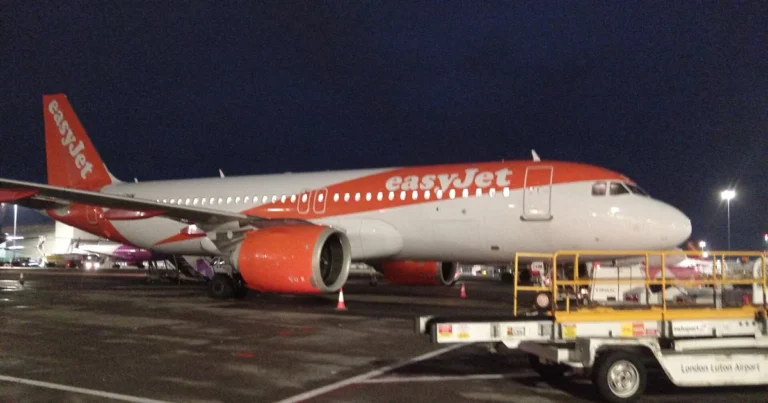
In July 2023 a passenger was due to fly from Izmir to Warsaw, but the flight arrived more than three hours late. The aircraft had previously operated a flight from Katowice to Izmir and had been delayed there by an air traffic management decision. That decision was linked to airspace restrictions in Hungary and Romania, put in place because of adverse weather. After landing in Izmir, a technical fault was also found on the aircraft, and it took more than two hours to repair.
The passenger had assigned his right to compensation to a specialised company, which claimed €400 from the airline. The Polish court hearing the case referred a question to the EU courts: when can an air traffic management decision count as an extraordinary circumstance? If the time lost because of that decision is deducted, the delay drops below three hours and no compensation is due. The facts come from the press release of the Court of Justice of the European Union of 8 October 2026.
- July 2023 The Izmir–Warsaw flight arrives more than three hours late
- 21 January 2026 The General Court of the EU rules that an air traffic management decision is, in principle, beyond the airline’s control, whatever its reason
- 8 October 2026 The Court of Justice sets that judgment aside (Case C-108/26)
Figure 1. Key steps in the case. Source: press release of the Court of Justice of the European Union, 8 October 2026.
What did the Court of Justice decide on 8 October 2026?
On 21 January 2026 the General Court had held that such a decision is not inherent in the normal exercise of an airline’s activity and is, in principle, beyond the airline’s actual control, irrespective of the reason for it, unless the airline contributed to it. In its view, the decision counted, not the reason behind it.
The Court of Justice did not accept this. For the first time, it set aside, to the extent it was under review (the answers to the first two questions), a preliminary-ruling judgment of the General Court, finding that the General Court’s interpretation adversely affected the unity and consistency of EU law.
According to the Court, not every air traffic management decision is in itself an extraordinary circumstance, because airlines regularly face such decisions as a matter of course in their operations. To establish an extraordinary circumstance, one has to identify the event that led to the decision and ask, case by case, whether that event, by its nature or origin, is not inherent in the normal exercise of the airline’s activity and is beyond its actual control.
The airline therefore has to demonstrate that the decision was taken on account of a circumstance which was itself of an extraordinary nature.
Is bad weather enough?
In this case the decision stemmed from restrictions in Hungarian and Romanian airspace imposed because of adverse weather. The Court said such weather can be an extraordinary circumstance, but only if it is so severe that it prevents the flight from being operated safely and in accordance with the schedule originally planned. Whether that was so on the Izmir–Warsaw flight is for the national court to establish.
The second key point is the calculation. An event can be an extraordinary circumstance even if it did not, on its own, cause a delay of at least three hours. Where the delay on arrival results both from such an event and from another circumstance, the delay caused by the extraordinary circumstance must be deducted from the total delay, and the remaining time decides whether compensation is due.
- General Court, 21 January 2026. The decision counts, not its reason. In principle it is beyond the airline’s control.
- Court of Justice, 8 October 2026. The event behind the decision must be identified and assessed case by case.
Figure 2. The two judgments compared. Source: press release of the Court of Justice of the European Union, 8 October 2026.
How does this relate to the new EU regulation?
Regulation (EU) 2026/2202, which amends EU261, was published in the Official Journal on 2 October 2026. It enters into force on the twentieth day after publication, 22 October 2026, and its rules apply from 23 October 2027. Until then the current text applies, and that is the text the judgment interprets.
The new text aligns the notion of extraordinary circumstances with the case law of the Court of Justice: an event that, by its nature or origin, is not inherent in the normal activity of the airline and is beyond its actual control. The airline is exempt from compensation only if it proves that the delay was caused by an extraordinary circumstance and could not have been avoided even if all reasonable measures had been taken. A direct causal link is required, and the burden of proof is on the airline.
The annex to the regulation gives a non-exhaustive list of extraordinary circumstances. It includes air traffic management or airport capacity restrictions and airspace closures, but only where the event results from a decision taken beyond the airline’s actual control. That is not the same question the Court answered, namely whether the event behind an air traffic management decision was itself extraordinary. How the two tests will fit together once the rules apply remains to be seen in practice.