What does Eurocontrol’s week 45 overview show?
According to Eurocontrol’s European Aviation Overview, published on 12 November 2026, the network handled an average of 27,649 flights a day in week 45 (2–8 November 2026), overflights included. That is 8.2% fewer than in week 44 and 1.0% fewer than in the same week of 2025. Eurocontrol explains the drop with several factors: the October half-term school holidays ended, and several airlines put into effect the capacity reductions for the 2026/27 winter schedule that they had announced earlier.
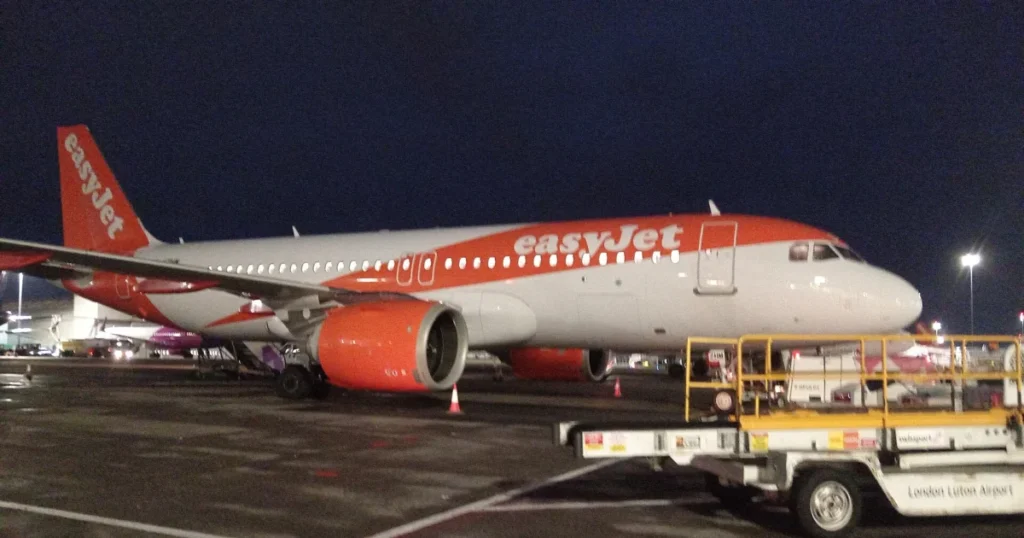
The ten busiest airlines cut their flight numbers by 8.9% on average in a single week. Low-cost carriers saw the largest declines: Ryanair Group flew 19% fewer flights and easyJet Group 18% fewer. KLM Group was the only one of the ten to grow (+1%), mainly because of additional flights between the Netherlands and the United Kingdom.
- 27,649 daily flights in week 45 (−8.2% on week 44, −1.0% on the same week of 2025)
- 81.8% arrival punctuality (−1.7 percentage points year on year), 77.5% departure punctuality (+0.3 percentage points)
- 1.1 minutes of air traffic flow management (ATFM) delay per flight: 0.5 en route, 0.6 at airports
- $4.42 per gallon average European jet fuel price (−10% over the previous two weeks)
Figure 1. European air traffic in week 45 (2–8 November 2026). Source: EUROCONTROL.
Where did traffic fall the most?
Flights across the ten busiest States fell by 10.4% on average compared with the previous week, and none of them grew. Germany saw a 13% decline; the United Kingdom, Spain and Italy 12%; Türkiye and Poland 10%; France 9%. The Netherlands stayed broadly stable. According to Eurocontrol, flights to Mediterranean leisure destinations, particularly Greece, Spain, Türkiye, Italy and France, were sharply reduced. It puts this down to the end of the half-term holidays, higher jet fuel prices and the announced winter capacity cuts, naming Ryanair Group, easyJet Group, Corendon Group and Eurowings Group in this context.
Compared with the same week of 2025 the picture is more mixed. Of the ten busiest States, Poland (+6%), Spain (+4%) and Italy (+2%) had more flights, while Germany and France had 5% fewer each. The six largest airline groups together flew 9.9% fewer flights in a week. Lufthansa Group fell by 9% week on week and is 8% below the same week last year. Year on year, Wizz Air Group grew by 16%, the largest increase among the ten busiest airlines. Over one week, non-scheduled traffic fell the most among the market segments (−27%), followed by low-cost (−16%).
How did punctuality and delays develop?
Arrival punctuality was 81.8%, 1.7 percentage points worse than in the same week of 2025. Departure punctuality was 77.5%, 0.3 percentage points better. Eurocontrol counts a flight as punctual if it arrives or departs within 15 minutes of the scheduled time (OTP15). For comparison, arrival punctuality for September as a whole was 75.9% (we covered it in a separate article), but a weekly and a monthly figure are not directly comparable.
En-route ATFM delay fell by 44% in a week, to about 15,000 minutes a day on average, 2% below the 2025 level. Air traffic flow management caused 1.1 minutes of delay per flight in total (0.5 en route and 0.6 at airports). ATC capacity and staffing caused 89% of en-route ATFM delays. By delay per flight, the area control centres contributing the most were Barcelona (1.1 minutes), Agadir (0.9), Seville (0.8), and Athens and Madrid (0.6 each). Barcelona had ATC capacity delays every day, with traffic demand 4% above the same week of 2025.
At airports, weather mattered. Paris Orly had daily capacity regulations, with weather regulations on Saturday and Sunday because of fog and low visibility, which caused the highest delays. At London Gatwick, weather regulations due to low visibility (LVP) applied towards the end of the week, with the highest delays on Friday and Sunday. London Heathrow was also subject to LVP weather regulations, with the highest delays on Saturday and Sunday. Manchester also had to regulate traffic because of low visibility, with the highest delays on Sunday. Athens ran on a single runway because of works.
What is happening with jet fuel prices?
The average European jet fuel price was $4.42 per gallon in week 45, down 10% over the previous two weeks. According to Eurocontrol, this reversed the rising trend of the September ($4.63) and October ($4.84) averages. The price is still almost double its pre-crisis level: in January and February 2026 it averaged $2.26.